3D Printed Cake Toppers
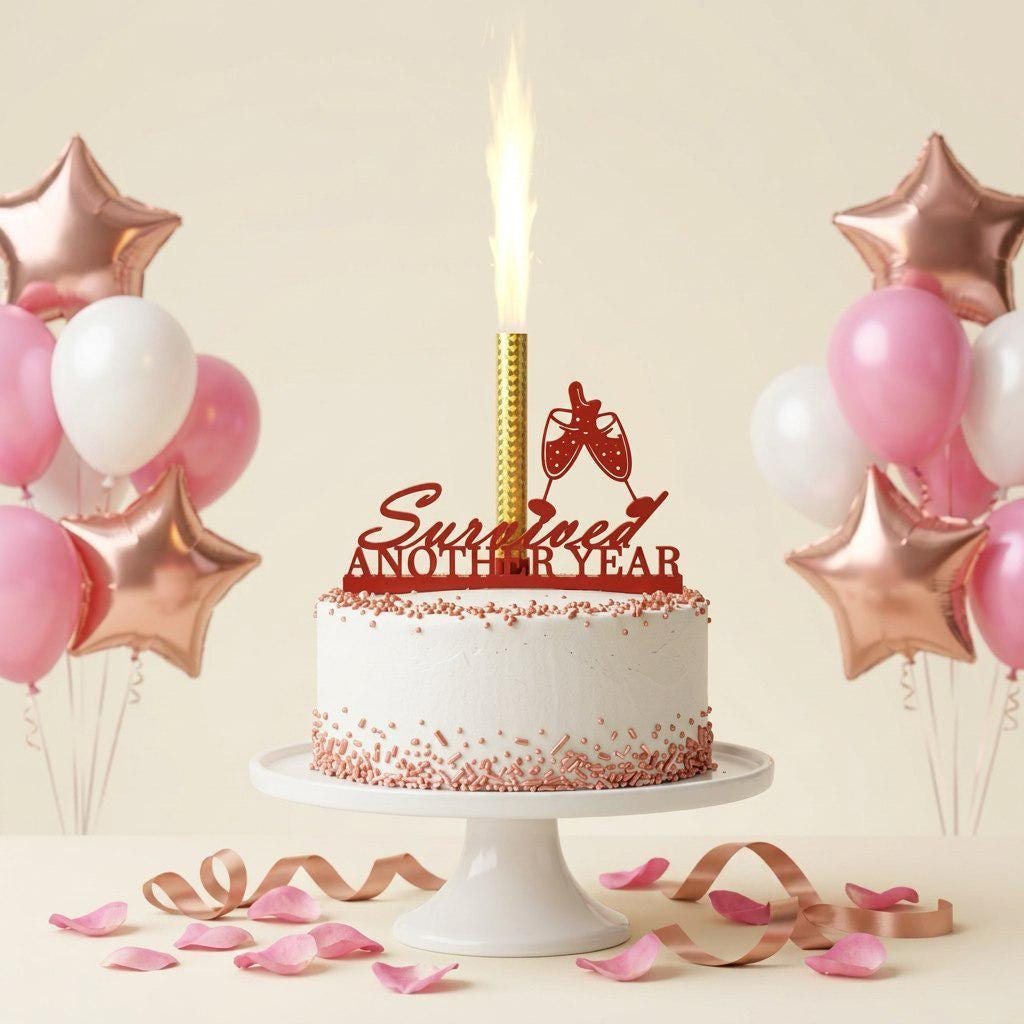
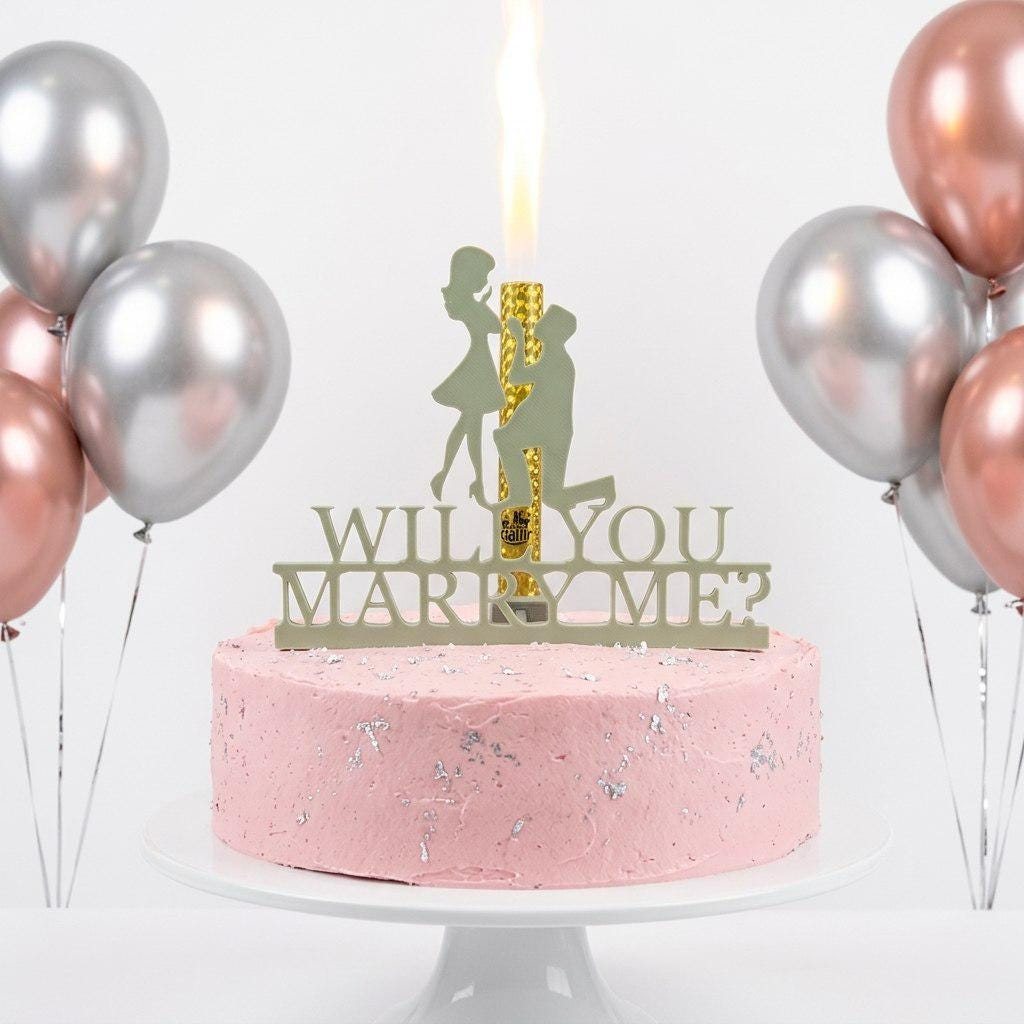
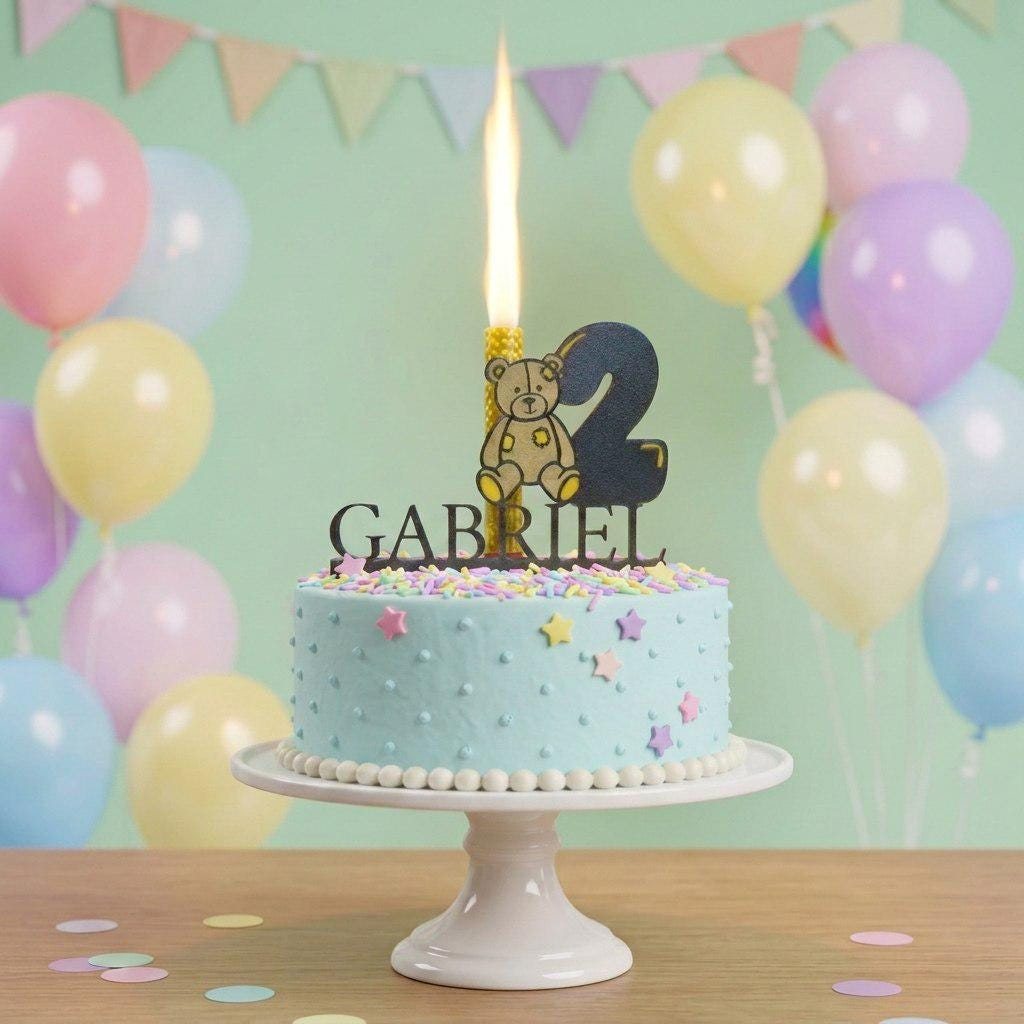
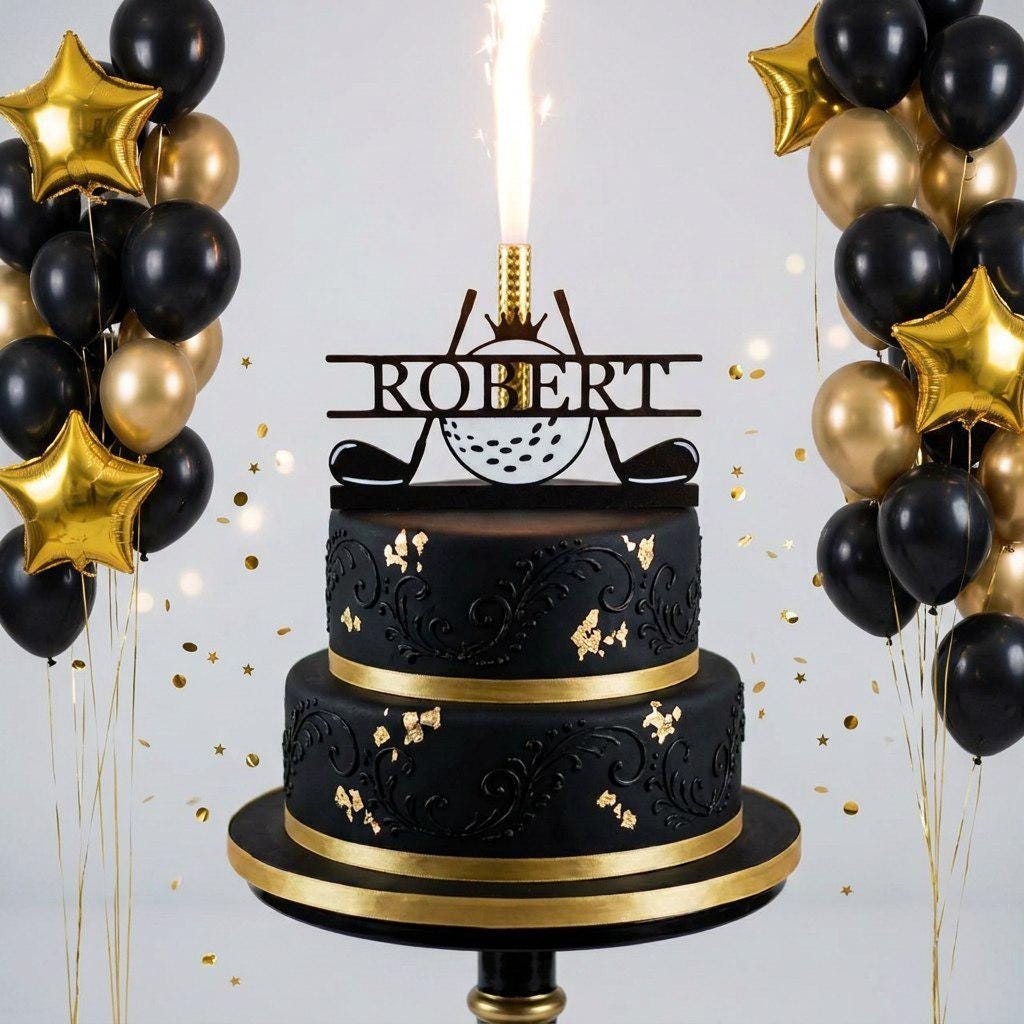
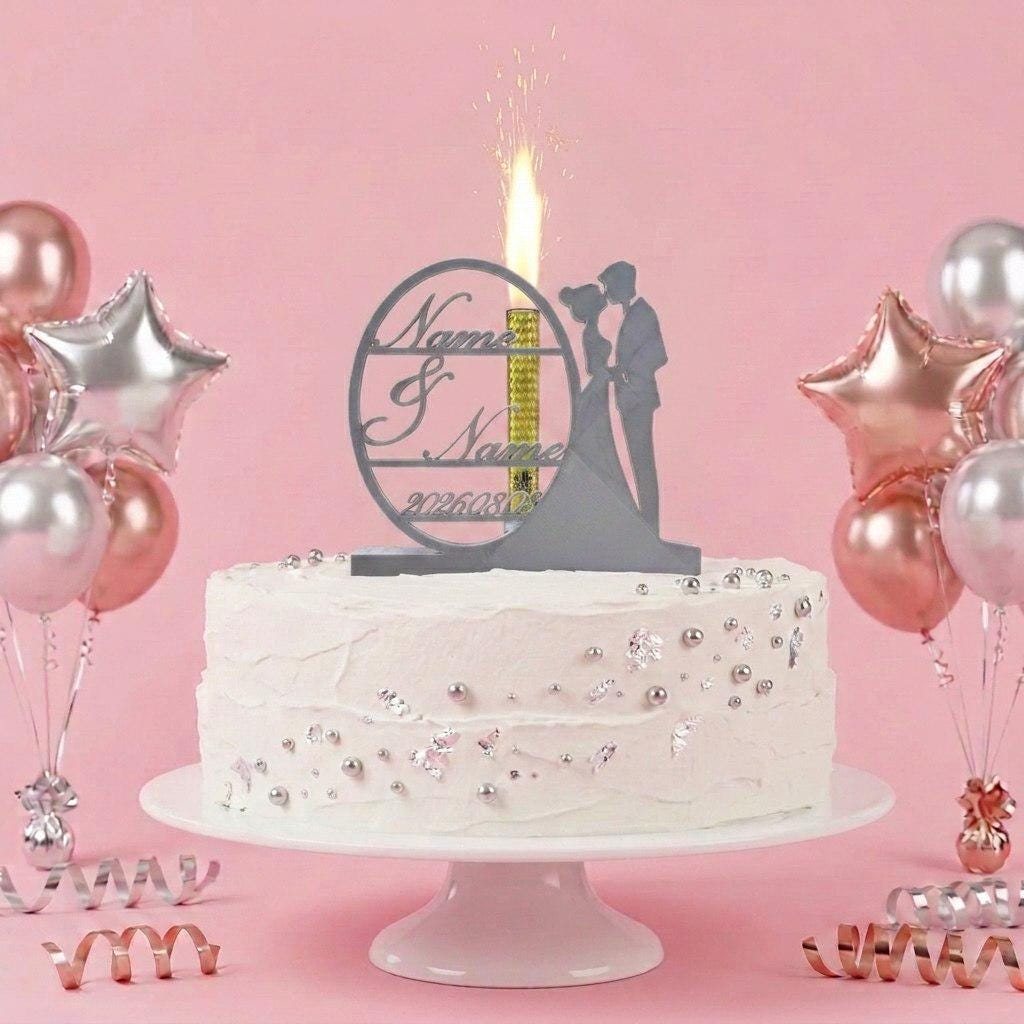
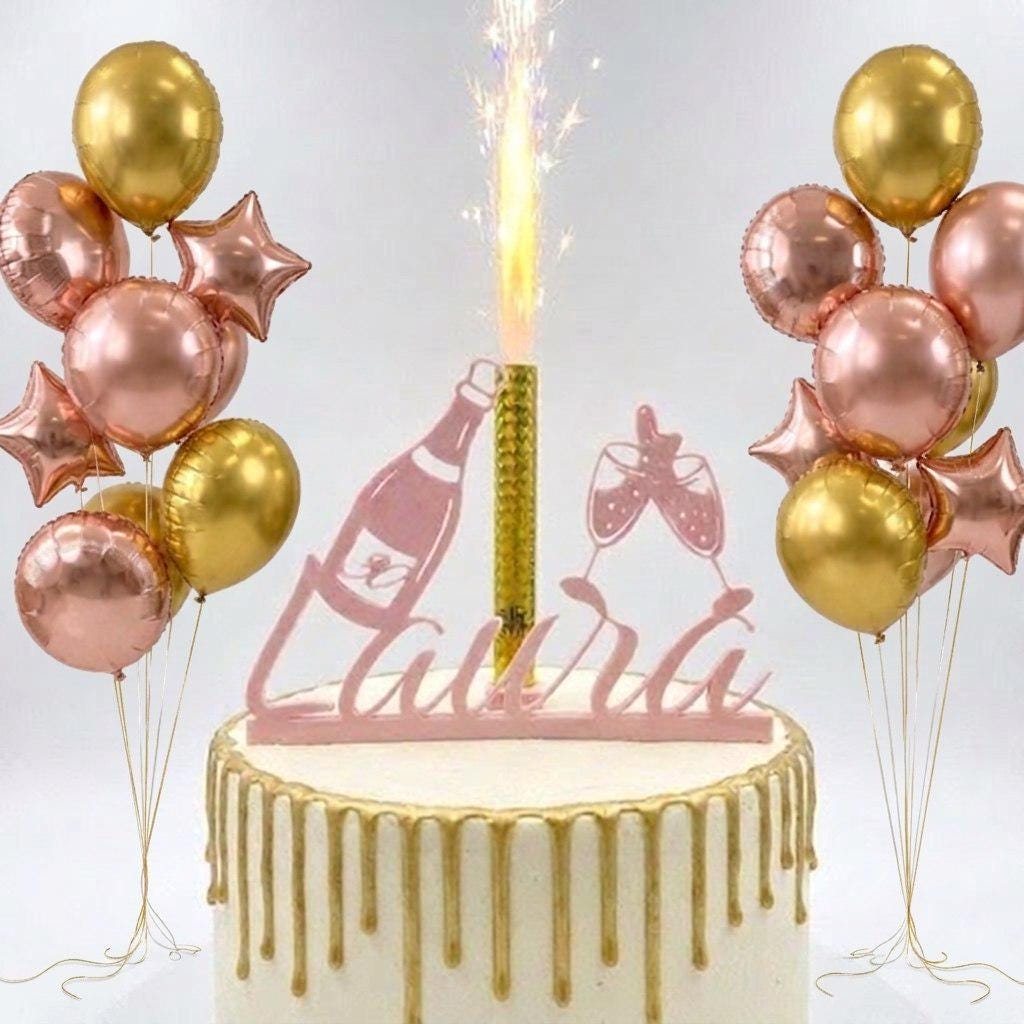
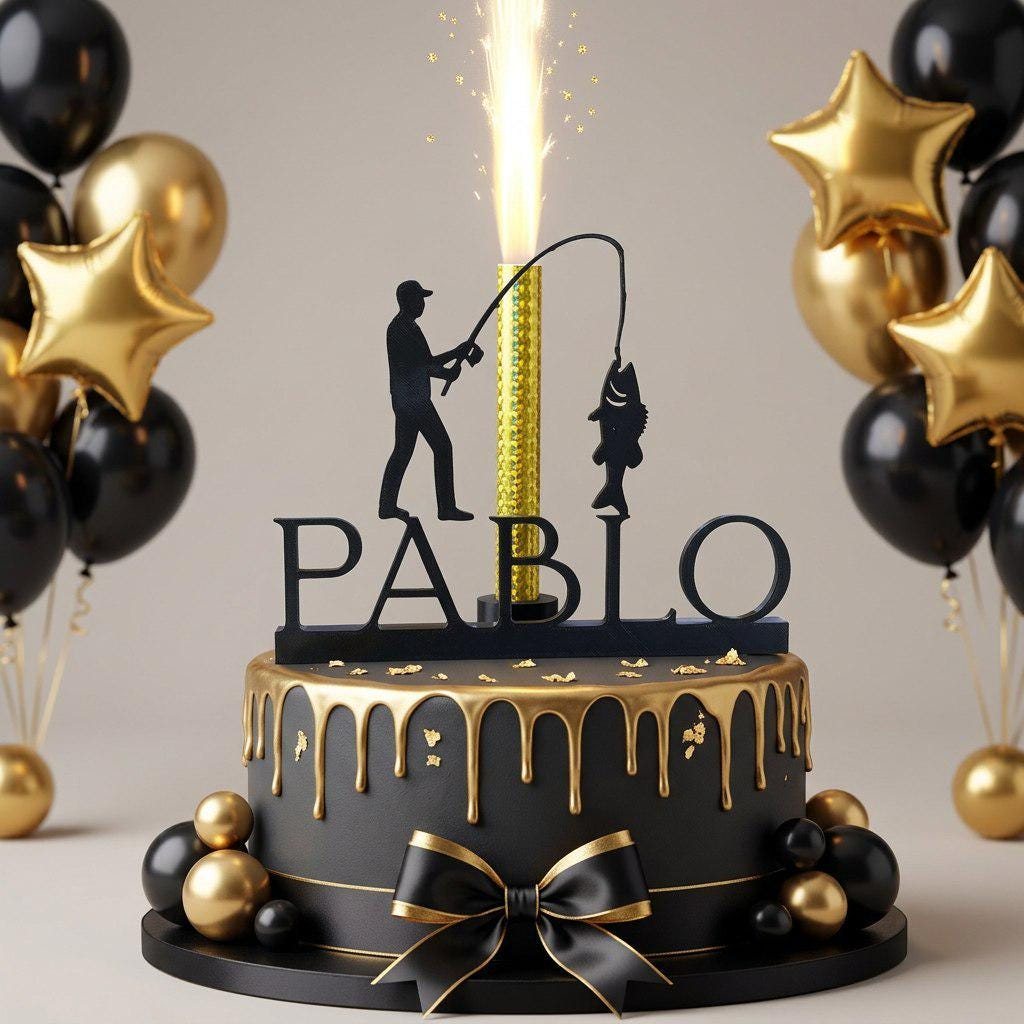
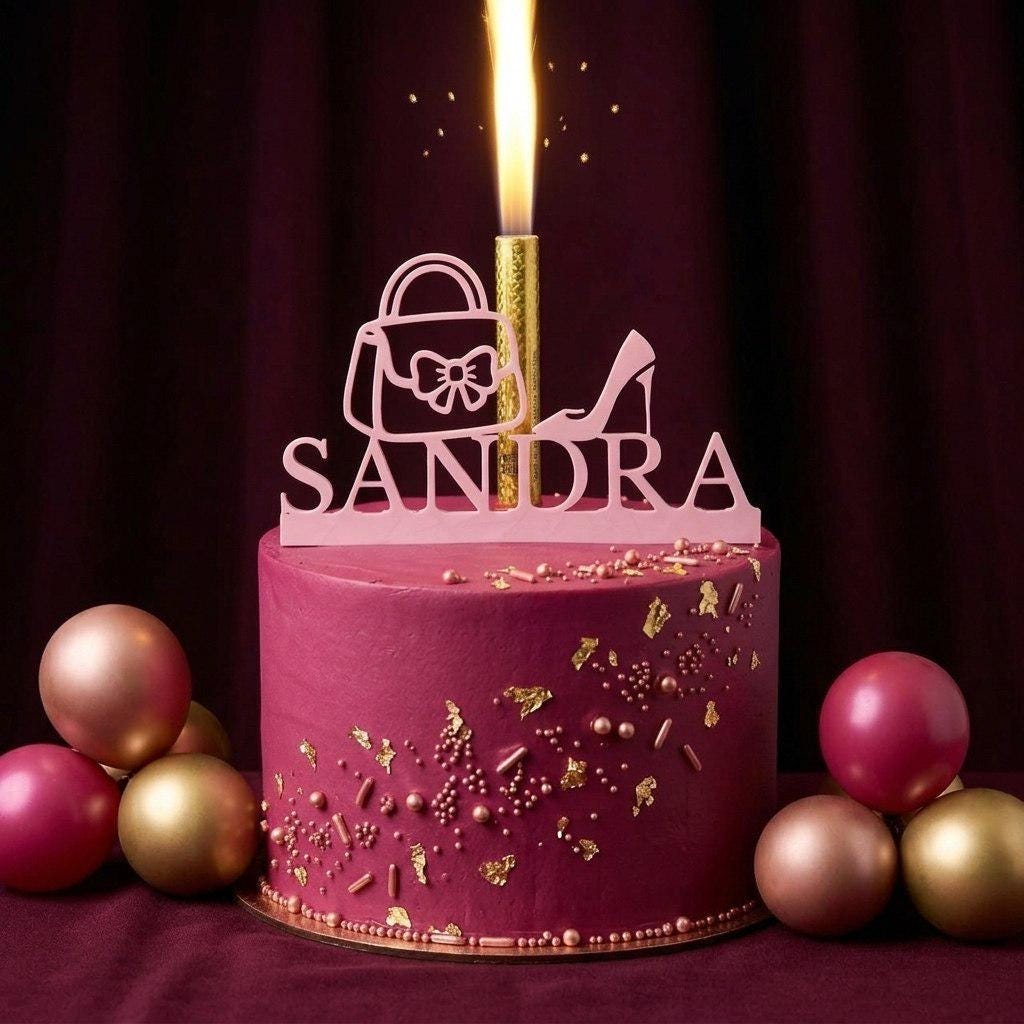
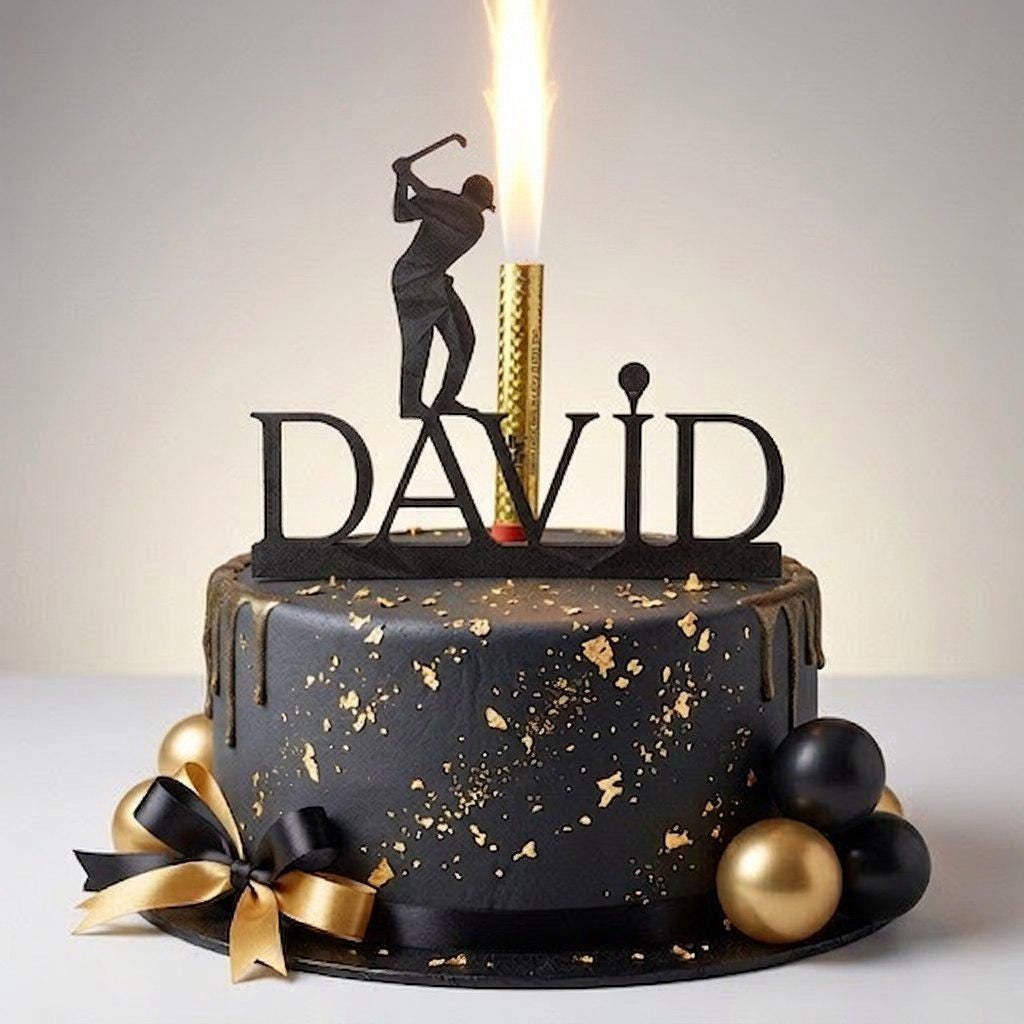
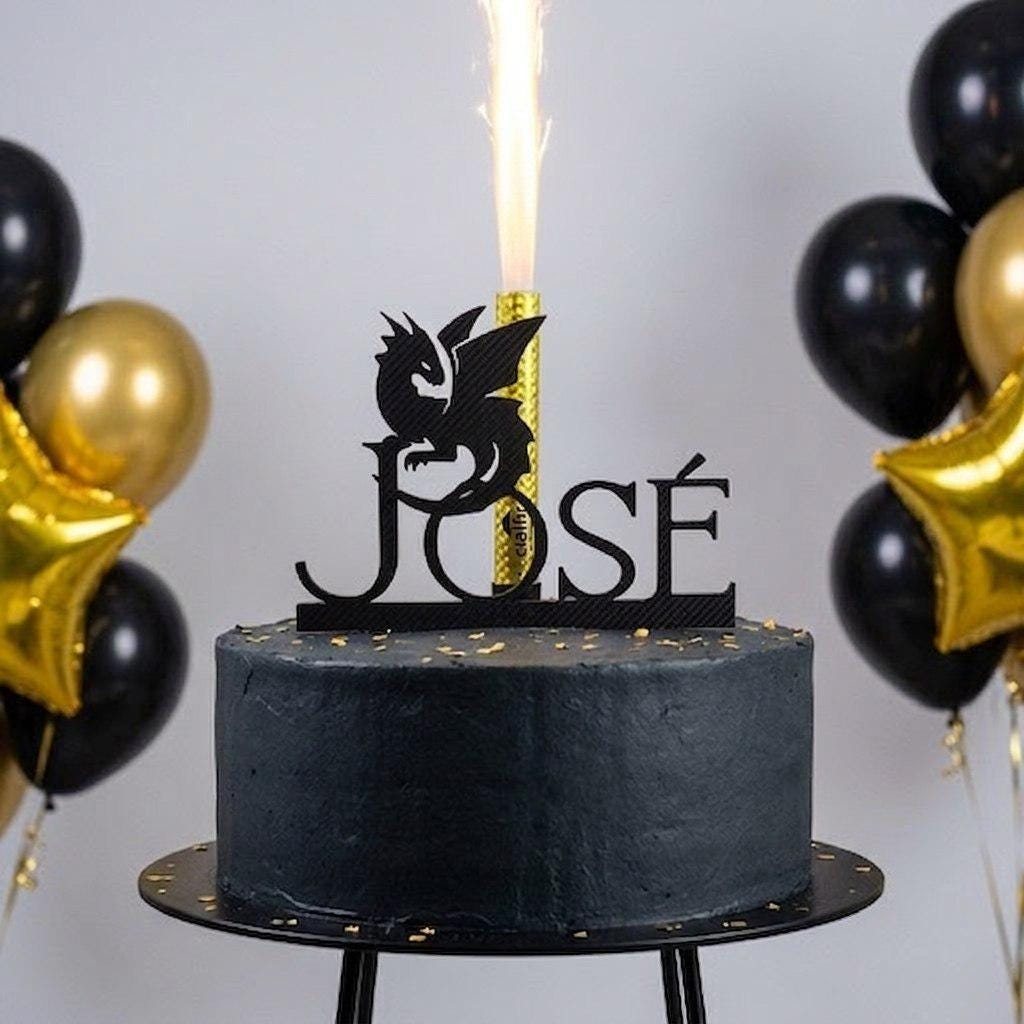
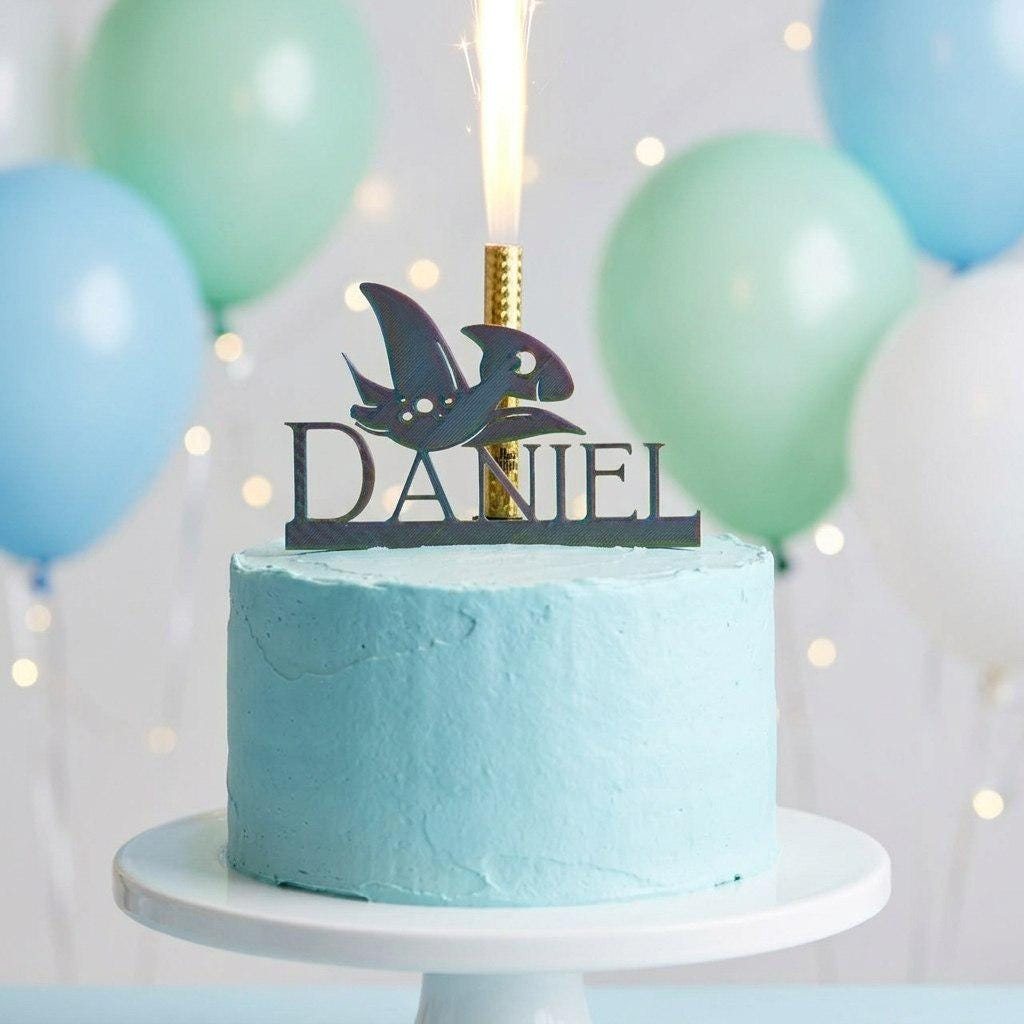
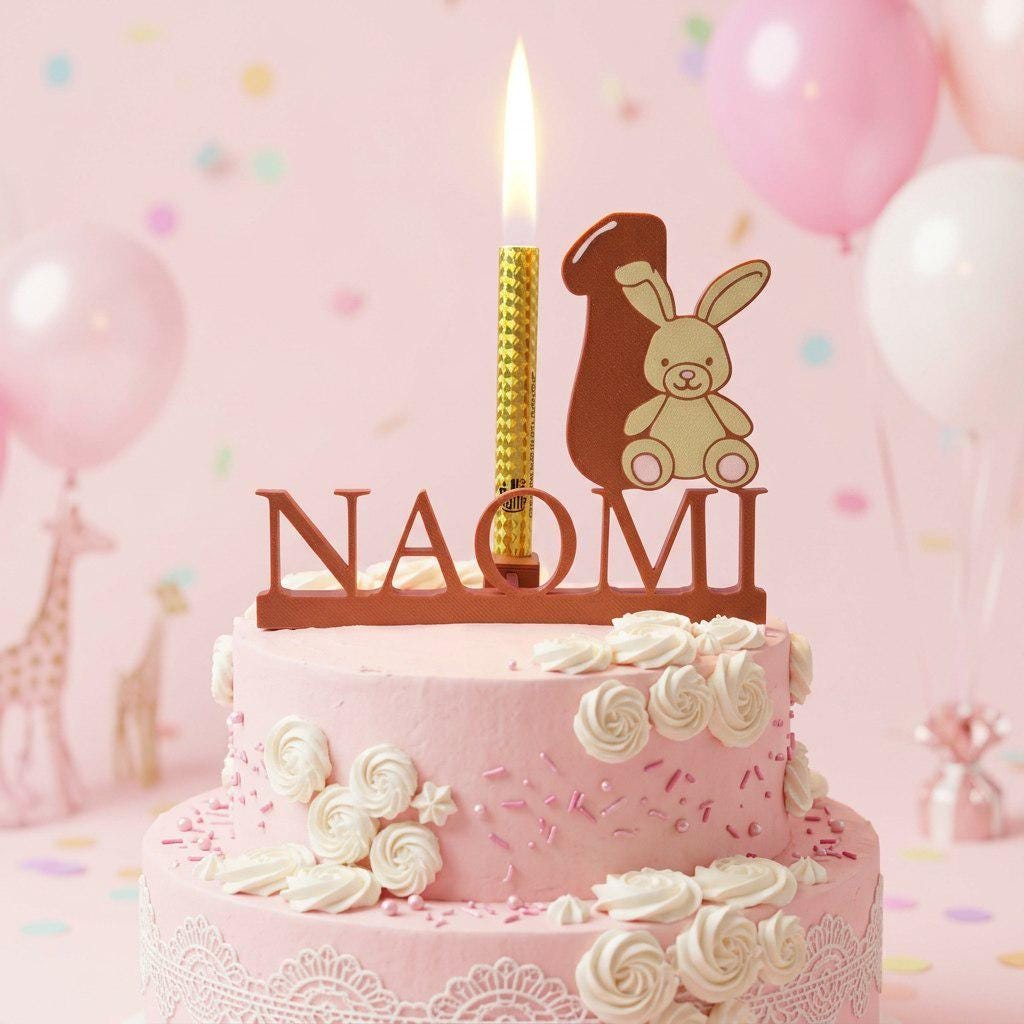
Every 3D printed cake topper we make is produced on our own machines in Spain, in PLA, one at a time, after you have ordered it. Nothing here is laser-cut acrylic, nothing is glitter card on a cocktail stick, and nothing is sitting in a warehouse waiting. That is what buys you the two things a flat topper cannot offer: real depth — a dragon with a body, a golfer mid-swing, letters standing proud of the surface — and a socket moulded into the base that holds a standard ice-fountain sparkler upright. This page explains the material, the process, the honest limitations, and how a 3D print compares with the acrylic and card toppers you will find everywhere else.
How a 3D printed cake topper is actually made
Each design begins as a 3D model. When you order a personalised one, your name, age or date is set into that model, the file is sliced into layers, and the printer builds the topper up from its base in fine strands of melted PLA — polylactic acid, a rigid plastic made from plant starch. A piece this size takes hours rather than minutes, which is the honest reason for our five-to-ten-day delivery promise instead of same-day dispatch.
The result is a single solid object. The lettering is not printed onto the surface; it is part of the surface. The colour runs all the way through, so a scuff does not reveal white underneath. And because the geometry is built in three dimensions, the fountain holder is not a separate part glued on afterwards — it is a socket formed in the base as the topper prints.
3D printed vs acrylic vs card: an honest comparison
- Card and glitter-card toppers cost roughly €2 to €10 and are the right choice if you want the cheapest thing that photographs well for one hour. They bend in the post, they wick moisture out of buttercream, and they leave with the paper plates.
- Acrylic toppers cost roughly €10 to €18, look sharp and last well — but they are flat. A laser cuts a 3 mm sheet, so an acrylic dragon is a dragon-shaped silhouette, and it cannot hold a fountain without a separate stand.
- 3D printed toppers, ours at roughly €18 to €28, are three-dimensional objects with volume, and the holder is part of them.
The trade-off is worth stating plainly: fine layer lines are visible up close on curved surfaces, the finish is matte rather than mirror-gloss, and this is not the material for razor-thin hairline script. So for a fine-line acrylic name sign, buy acrylic. For a model of the thing your child loves, holding a sparkler, that still exists in ten years, buy this.
PLA, food, and the things we will not claim
A 3D printed topper is not edible and it is not food safe, and anyone claiming otherwise about a printed part is being loose with the word. The printing process leaves microscopic gaps between layers, which is not a surface to serve or store food from. Ours are decorations: they rest on the icing, they are lifted off before the cake is cut, and if your buttercream is soft we suggest a small disc of baking paper under the base.
PLA is rigid, dimensionally stable and does not yellow the way cheap plastics do, but it softens in heat. Do not leave a topper on a sunny windowsill or in a car in August, and never put one through a dishwasher or anywhere near an oven. Wash the base in cool water, dry it, keep it in a drawer, and it will last indefinitely.
Frequently asked questions
Are 3D printed cake toppers food safe?
No, and we will not claim otherwise. The layer lines left by 3D printing create microscopic gaps that cannot be reliably cleaned, so a printed part should never be treated as food-contact plastic. Ours are decorations that sit on the icing and are removed before cutting; use baking paper if the surface is soft.
What is PLA?
Polylactic acid: a rigid plastic made from plant starch rather than petroleum, and the standard material for consumer 3D printing. It holds fine detail, keeps its colour all the way through the object, and does not turn brittle on a shelf. It does soften in heat, so keep the topper out of direct sun.
Is a 3D printed cake topper better than an acrylic one?
Different rather than automatically better. Acrylic is flat, glossy and excellent for fine-line lettering. A 3D print has real depth, colour through the whole object and a built-in sparkler holder, but shows faint layer lines up close and has a matte finish. Choose by what the design actually needs.
Why do they cost more than the cake toppers on Amazon?
Because each one is printed for you, on our machines, over several hours, then finished and packed by hand by the one person who makes them. A cheap topper is a die-cut piece of card made in the thousands. You are paying for a solid object with a fountain holder built into it that still exists after the party.
Can a 3D printed cake topper be reused?
Yes. Wipe the base clean once the fountain has burnt out and it goes back into a drawer or onto a shelf. Designs without a specific age printed on them come out year after year. Personalised ones are keepsakes rather than reusables, but keepsake is the point, and PLA does not degrade in a box.